

Understand the Bible, Israel, and the Jewish roots of your faith.
Our articles help you reconnect with the Jewish world of Scripture, the land of Israel, the biblical feasts, current events, and the promises of God that still matter today.
Read along, ask better questions, and see the story more clearly.
Search Articles
Find the topic, question, or passage you’re looking for.
Search our articles by topic, guest, Scripture, season, or current event. Whether you’re learning about Israel, the Jewish roots of Christianity, biblical feasts, prophecy, Hebrew words, or the world of Jesus, this is a place to keep digging.
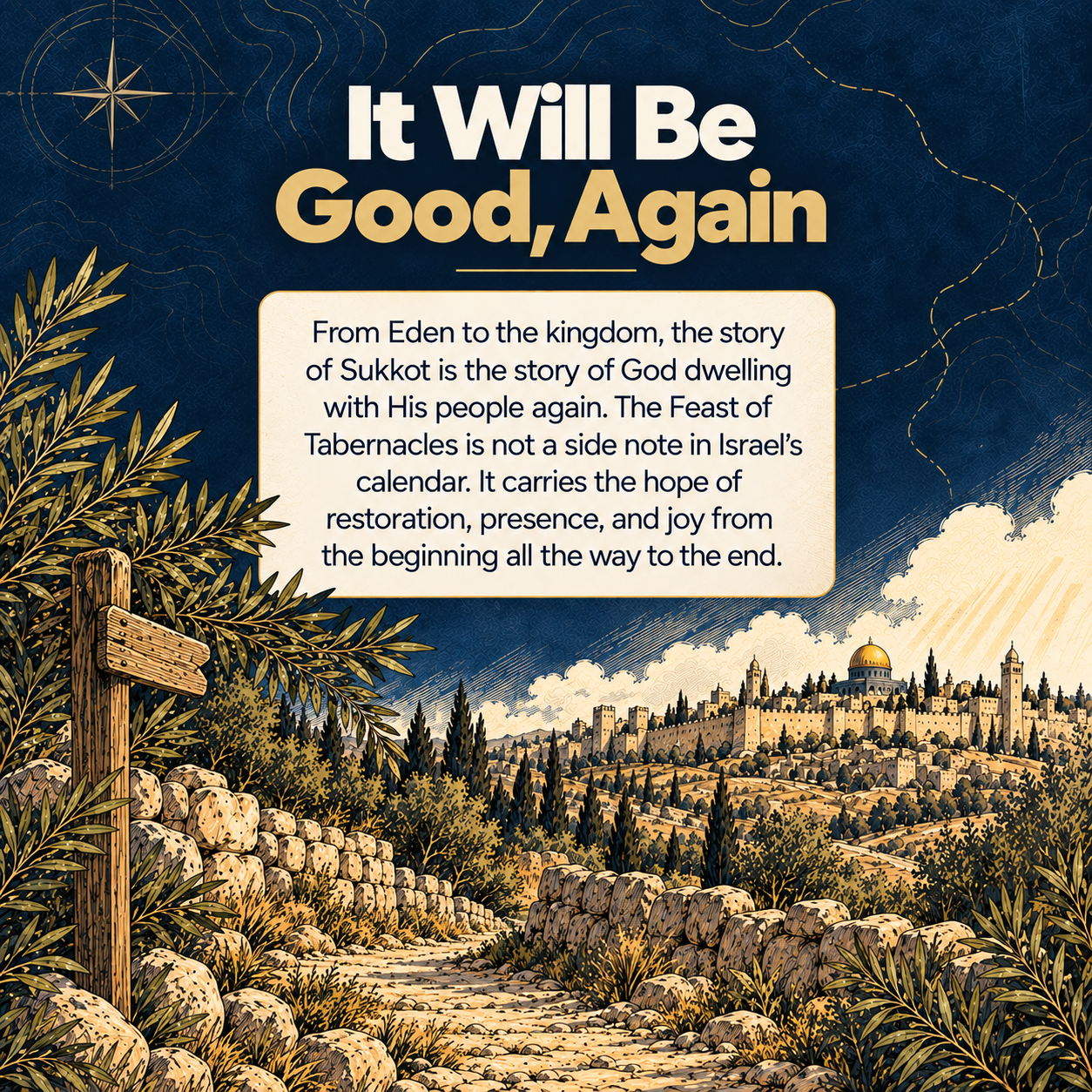
It Will Be Good, Again | Restoration through the lens of Tabernacles
Genesis begins with a world ordered for life with God. Humanity bears His image and lives within His creation without Temple walls, priests, sacrifices, or sacred buildings separating holy space from ordinary space. Genesis 3:8 describes the LORD God “walking in the garden in the cool of the day.” Whatever questions we may ask about the precise nature of that encounter, the picture Genesis gives us is sure: humanity was created for life in the presence of God.

The Fall Feasts and the End of the Age
Let’s look at the prophetic nature of the fall feasts of Israel -- we begin with the Feast of Trumpets or as it is referred to today as Rosh Hashanah (Scripture does not originally call it Rosh Hashanah, although that name and its associated traditions became established in later Judaism). We will stick with the Biblical designation: Yom Teruah / Feast of Trumpets.
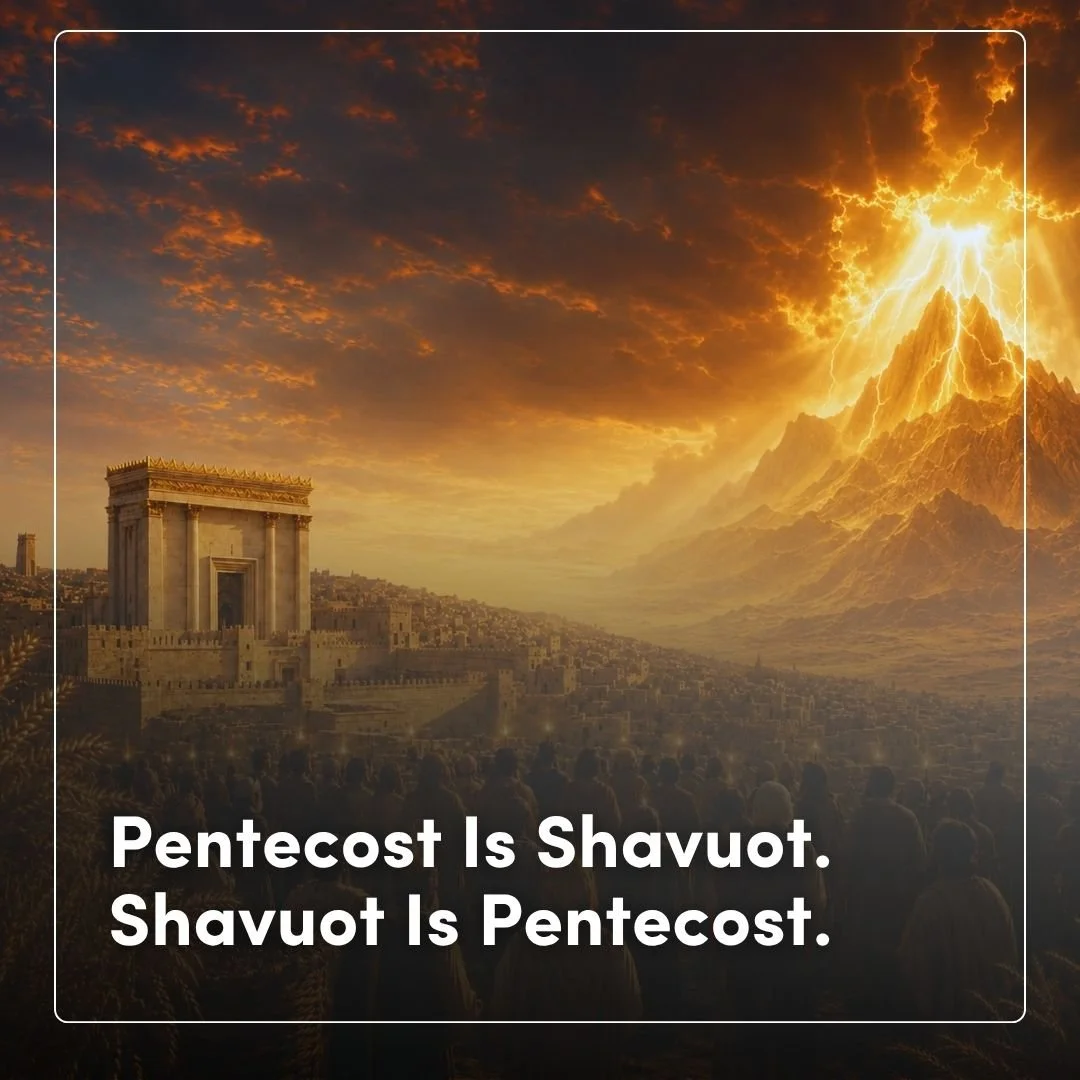
Pentecost Is Shavuot. Shavuot Is Pentecost.
We often use different words, follow different calendars, and celebrate different traditions. But underneath those differences is a shared biblical foundation, and in this case, both friends are standing on the same appointed time of God.
Pentecost is the Feast of Weeks, which in Hebrew is Shavuot. Shavuot is Pentecost. And it carries very significant meaning for both Christians and Jews.

We Used To Live Here
A personal Messianic reflection exploring the forgotten roots of Easter, the biblical Feast of First Fruits, and the significance of the 17th of Nisan—the day Jesus rose from the grave. Discover how the resurrection aligns with God’s appointed times, why it matters, and how reconnecting to the Jewish foundation of our faith brings deeper meaning to this season.
Hanukkah: Darkness to Light
Discover the rich history and significance of Hanukkah, the Festival of Lights, celebrating God’s faithfulness in preserving the Jewish people. Learn about the Maccabean revolt, the rededication of the Temple, and the miracle of the oil lasting eight days. Explore how Jesus celebrated Hanukkah in John 10:22-23 and why this festival is meaningful for both Jews and Christians today.

The Day of Atonement: What Are We Missing?
As we approach the High Holidays, many in the Jewish community focus on making things right with God through fasting, prayer, and good deeds. Yom Kippur, the holiest day of the year, is seen as the pinnacle of this process, where we seek forgiveness from those we've wronged and from God. But while these traditions are deeply rooted in Jewish culture, have we fully grasped what Yom Kippur is truly about according to the Scriptures?

The Sun, Moon, and Stars
Explore the marvels of the sun, moon, and stars through the lens of Biblical teachings. Dive into the sacred calendar and divine timing set by God, as this blog post unveils the spiritual significance of celestial events and the ancient Hebrew calendar. Discover the harmony between the heavens and the Biblical feasts, and how they guide us in marking time and celebrating God's creation.

Why The Split?
Have you ever noticed how some years, the Christian celebration of Passion Week and the Jewish observance of Passover appear to be closely aligned, while other times they seem to be out of sync? It may leave you wondering why these two significant holy seasons don’t always coincide. In order to understand this, we need to look into history and examine the calendars followed by each tradition. Let’s explore how the split between Resurrection and Passover occurred and why.

Day 10: The Scapegoat that became the G.O.A.T. (Yom Kippur)
Here we are, at the peak of the Ten Days of Awe, Yom Kippur. It's the Day of Atonement, a time when many Jewish people fast, pray, and attend synagogue services. This solemn day carries enormous significance. It's not just a day to say sorry, but to truly reflect on one's actions and seek genuine atonement. While the weight of the day is profoundly felt in Jewish communities, it also offers an extraordinary moment for us as followers of Jesus to recognize Him as our ultimate atonement.
Day 9: No Longer Bound: Released From Sin Into Salvation
The human soul seems hardwired to long for atonement—a strong, sometimes desperate, desire for forgiveness and release. This is a sentiment that echoes across cultures and religious practices, revealing a shared yearning to be set right with God. As we delve into Day 9, we find in the story of the Akedah a vivid representation of how far God was willing to go to grant us that atonement. "God will provide for Himself the lamb for a burnt offering, my son," Abraham tells Isaac, echoing a promise fulfilled through Jesus (Genesis 22:8).
Day 8: Cast my sins into the depths of the sea. (Tashlich)
There is the practice of Tashlich, a deeply symbolic ceremony that resonates with believers of all backgrounds. As the sun sets and the day comes to an end, many Jewish people flock to rivers and streams, emptying their pockets or throwing pieces of bread into the water. This simple yet powerful act serves as a physical embodiment of letting go, a casting away of sins and burdens. For Christians, it's hard not to think of the ultimate sacrifice of Jesus, the Messiah, who makes it possible to truly cast our sins "as far as the east is from the west."
Day 7: What does it mean to return to the Lord? (Shabbat Shuvah)
Central to the Days of Awe is what we call Shabbat Shuvah, or the "Sabbath of Return." Situated between Rosh Hashanah and Yom Kippur, this Shabbat holds a special significance. It serves as a momentary pause, a sacred interval for personal and communal reflection. In a season filled with introspection and repentance, Shabbat Shuvah invites us to come home - to return to the Lord with all our hearts. For Christians, this idea of "returning" finds its full expression in the grace and redemption offered through Jesus, our Messiah.