Cleaning house
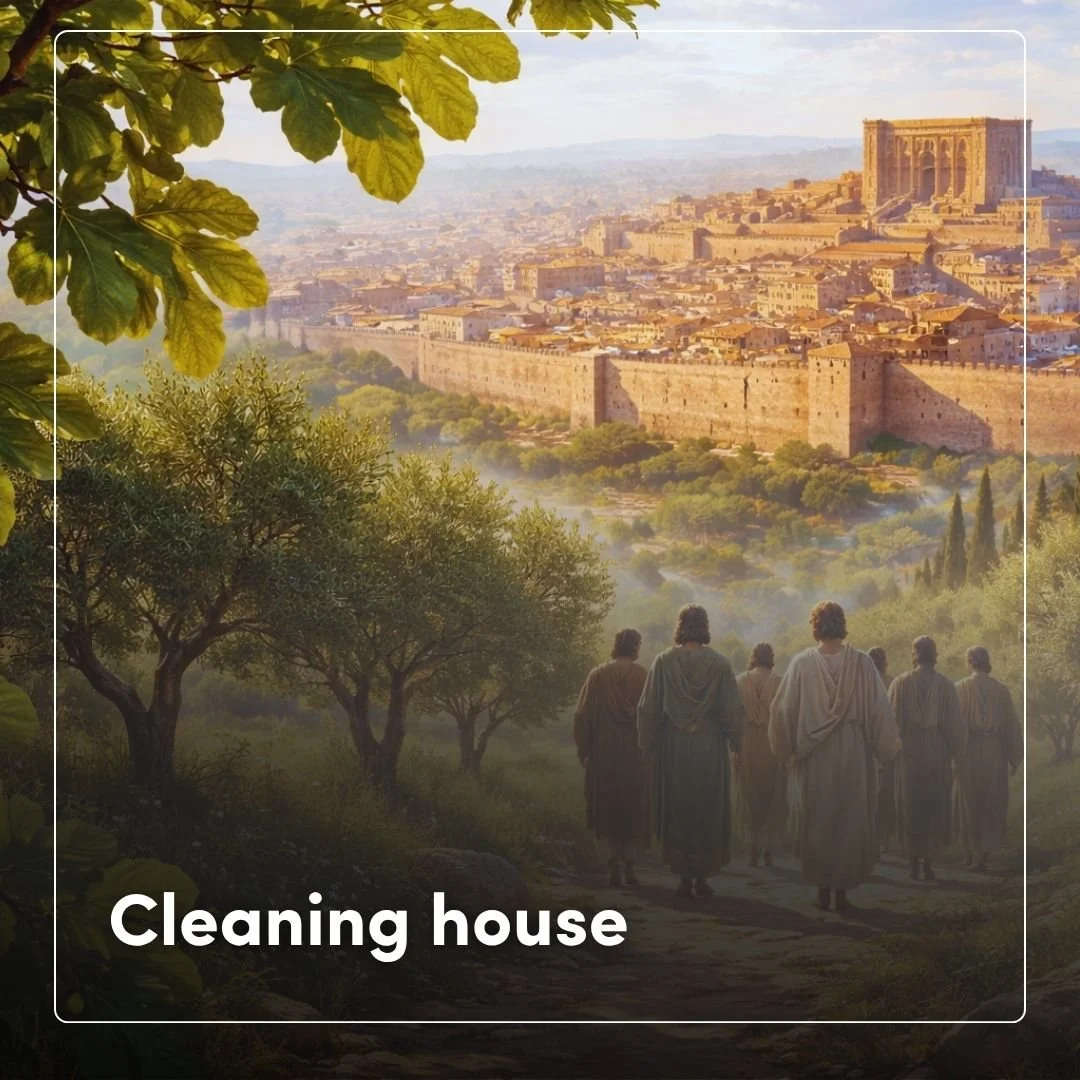
You can thank the Jewish people for Spring cleaning.
If you grew up in a Jewish home, the weeks leading up to Passover had a rhythm all their own. Cabinets were opened, shelves were cleared, and every last crumb was taken seriously. It carried a sense of urgency and purpose. You went through everything carefully, and then came the decision point every kid remembers: eat it or throw it out. The pantry shifted overnight. Hawaiian rolls disappeared. Lucky Charms no longer had a place on the shelf. In their place came matzah, simple and unleavened, setting the tone for what was about to be remembered.
At the center of all of this is something called chametz, or leaven. Chametz refers to any food made from grain that has been allowed to ferment and rise. Bread, crackers, cereal, anything that puffs up falls into that category. In Exodus 12, as God prepares Israel for their departure from Egypt, He gives very specific instructions.
“Seven days you shall eat unleavened bread. On the first day you shall remove leaven out of your houses…” (Exodus 12:15).
The urgency of the Exodus meant there was no time for dough to rise. What began as a practical reality became a lasting command.
Passover and the Feast of Unleavened Bread move together. Passover marks the night of deliverance, when the blood of the lamb covered the homes of Israel and judgment passed over them. Immediately following is the seven-day Feast of Unleavened Bread, where the removal of leaven becomes a lived reminder. Each year, Israel steps back into that moment, not only in story, but in practice. You clear out the old. You make space for something new. The house is prepared because something sacred is about to be remembered.
Now take this background as we now hyperlink this to the Gospels.
Jesus cleans His Father’s house
Jesus is on His way to Jerusalem to commemorate this same occasion, Passover. 1,400 years later, you would have found the Jewish people remembering the Exodus, just as we do 2,000 years after the time of Jesus.
The city is filling with pilgrims. Homes are being cleaned. Leaven is being removed. Lambs will soon be selected. The entire nation is moving in rhythm with the memory of redemption.
Jesus enters the Temple, and the moment unfolds with intensity. Matthew writes,
“And Jesus entered the temple and drove out all who sold and bought in the temple, and he overturned the tables of the money-changers and the seats of those who sold pigeons” (Matthew 21:12).
Mark tells us He stopped people from carrying goods through the Temple courts (Mark 11:16). John records His words,
“Take these things away; do not make my Father’s house a house of trade” (John 2:16).
The Temple was meant to be a place of prayer, a space where people could come before God. Jesus quotes Isaiah 56:7,
“My house shall be called a house of prayer,”
and pairs it with Jeremiah 7:11,
“You have made it a den of robbers.”
The issue centers on what has filled the house. Activity had taken over in a way that displaced its purpose.
Placed within the Passover setting, the connection becomes clearer. While families across Israel are searching their homes for leaven and removing what does not belong, Jesus enters His Father’s house and does the same. The season and the action move together. The house is being prepared.
Mark adds another layer by how he tells the story. He surrounds the Temple cleansing with the account of the fig tree. On the way into Jerusalem, Jesus approaches a fig tree full of leaves. When He looks for fruit, He finds none. He says,
“May no one ever eat fruit from you again” (Mark 11:14).
Later, the disciples see that the tree has withered from the roots. Mark adds another layer by how he tells the story. He surrounds the Temple cleansing with the account of the fig tree. On the way into Jerusalem, Jesus approaches a fig tree full of leaves. When He looks for fruit, He finds none. He says,
“May no one ever eat fruit from you again” (Mark 11:14).
Later, the disciples see that the tree has withered from the roots.
Along that same route, just before entering Jerusalem, sits a small village called Bethphage. In Hebrew, Beit-Phage (בֵּית פַּגֵּי) means “House of the Early Figs.” It is the very place associated with the kind of early fig fruit that appears before the main season. Jesus is moving through the “house of early figs,” sees a tree full of leaves, and rightly expects to find that early fruit. The setting itself reinforces the expectation.
Within the natural rhythm of the fig tree, leaves create expectation. Early fruit often appears before the full season, and leaves signal that something should be there. The tree presents the appearance of life, yet it lacks what is expected.
The prophets had long used this imagery. Hosea 9:10 says,
“Like grapes in the wilderness, I found Israel. Like the first fruit on the fig tree in its first season, I saw your fathers.”
The fig tree becomes a symbol of the people themselves. In this moment, Jesus steps into that prophetic tradition. The action in the Temple and the sign of the fig tree speak together, revealing a house that appears full while lacking what God desires.
Leaven carries a similar meaning in Scripture. It represents something that spreads and works its way through everything it touches. Jesus warns,
“Beware of the leaven of the Pharisees and Sadducees” (Matthew 16:6),
pointing to teaching that shapes lives over time. Paul later writes,
“Do you not know that a little leaven leavens the whole lump?” (1 Corinthians 5:6).
The influence of something small extends far beyond its starting point.
The cleansing of the Temple aligns with that imagery. What has taken root within the house has spread, shaping the entire environment. Jesus clears the space, restoring it to what it was meant to be.
And in that moment, as the house is being cleansed and the system is being exposed, the Lamb is already in the city.
The Lamb and the cleansing
Passover provides the framework for everything that follows. In Exodus 12:3, the people are instructed to select a lamb on the tenth day of Nisan. That lamb would be examined and kept until the time of sacrifice. In the Gospel accounts, this is the very window when Jesus enters Jerusalem. He is seen, questioned, challenged, and observed.
John introduces Him earlier with these words:
“Behold, the Lamb of God, who takes away the sin of the world” (John 1:29).
During Passover, that identity moves from declaration into fulfillment. As the Temple is being cleansed, the Lamb is being revealed.
Paul later brings this connection into full clarity.
“Cleanse out the old leaven that you may be a new lump…For Messiah, our Passover lamb, has been sacrificed” (1 Corinthians 5:7).
The language of Passover becomes the language of redemption in Messiah. The removal of leaven points toward a deeper cleansing that reaches into the heart.
The pattern holds together. There is a house. There is preparation. There is a lamb.
A house prepared for God
The New Testament carries this imagery forward. The Temple is no longer only a building. Paul writes,
“Do you not know that you are God’s temple and that God’s Spirit dwells in you?” (1 Corinthians 3:16).
The dwelling place of God extends into the lives of His people. The question of preparation remains.
The practice of removing chametz always involved attention to detail. You searched beyond what was visible. You checked the corners. The process itself shaped awareness and readiness.
Paul echoes this same principle:
“Let us therefore celebrate the festival…with the unleavened bread of sincerity and truth” (1 Corinthians 5:8).
The focus moves from physical leaven to the condition of the inner life. What fills the house matters. What spreads matters. What remains matters.
Jesus’ actions in the Temple reveal His authority over the house and His desire for it to reflect its true purpose. The space becomes aligned with what it was always meant to be, a place where God is honored and encountered.
Cleaning house in our day
Every year, Jewish families step into this rhythm again. The cleaning is physical, and the meaning runs deeper. It is about remembering redemption and preparing for it. It is about aligning the home with the story.
That same invitation continues, but it isn’t just for the Jewish people. We are not trying to create a band of zealots, telling Christians in the church of a new mandatory statute for you to observe in your home. But we are inviting you into a deeper observance of the season. If this week were simply about waving palm branches, attending a Good Friday service followed by an egg hunt and Easter services, you may be filled, but we’d argue not fully filled. There’s more to the story, and you can take part. No, you don’t have to throw out your ciabatta rolls or the beloved naan bread, but you could, if it helps to remind you, like it reminds me, there’s still some leaven in my life I am holding on to.
All of this is a reminder: Passover points back to the night of deliverance. The Temple points to the place of meeting. The Lamb points to the one through whom it all comes together. The act of cleaning house points toward readiness.
God is drawing near.
The Lamb has been given.
The house is being prepared.
And when He enters, everything finds its proper place.
About The Jewish Road
At the heart of The Jewish Road lies a passion ignited by a father-son duo, Ron and Matt Davis. Our journey began with a simple yet profound desire: to bridge the gap in understanding that has kept two faith communities apart for too long. We're here to help Christians connect with the roots of their faith and for Jews to explore the life and teachings of Jesus with an open heart.
Imagine a world where every believer, be they Jewish or Christian, not only knows their faith but truly understands its origins and interconnectedness. We strive to restore the Jewish essence of the Gospel, offering insights that deepen knowledge, bolster faith, and propel the growth of the Kingdom. The narrative of faith, we believe, is a two-act play where both acts are essential for a comprehensive grasp of the story. By uniting these acts, we're presenting a more holistic and enriching perspective.
Life is too short to wander without knowing the full essence of your beliefs. Whether you're attending a synagogue or a church, there's so much more to discover. The Jewish Road is here to guide, enlighten, and, most importantly, bring both halves of the story together. Join us on this journey; together